Real world impact.
Engineering delivery under real-world constraints. From embedded software and verification to safety, systems, toolchains, and AI-augmented engineering.
Enterprise ALM & Polarion Deployment
Unifying global engineering teams
Context
Large automotive programs operating across distributed teams struggled with fragmented tooling, inconsistent engineering processes, and limited traceability between requirements, design, testing, and safety artifacts.
Engineering Challenge
Disconnected tools and manual workflows made compliance difficult to demonstrate and audit preparation costly and late in the development lifecycle.
Our Contribution
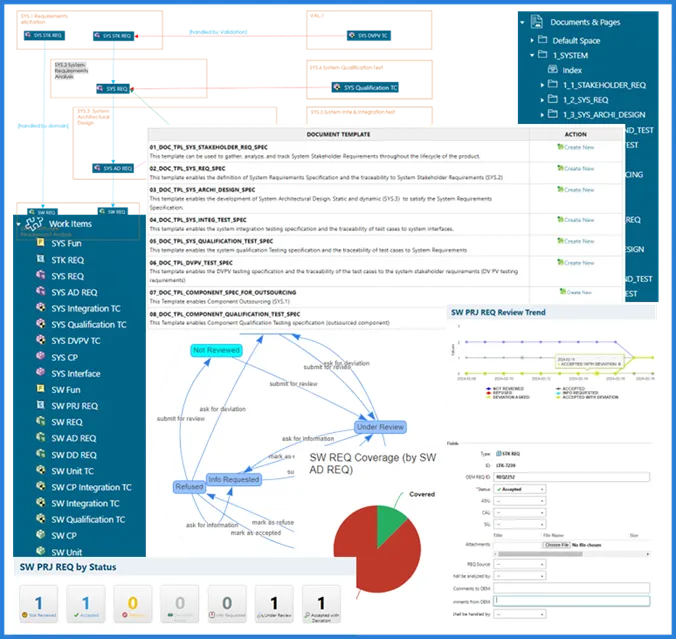
- Definition of ALM information models aligned to ASPICE and ISO 26262
- Deployment and customization of Polarion ALM
- Migration of legacy requirements, test cases, and verification artifacts
- Configuration of V-model traceability and review workflows
- Integration with Jira, MATLAB/Simulink, and test toolchains
- Coaching of engineering teams for sustainable adoption
Outcome
A unified ALM backbone enabling consistent engineering execution, full bidirectional traceability, and improved readiness for audits and certification activities.
Fuel Cell ECU Platform
H2 powertrain for mobility and transportation
Context
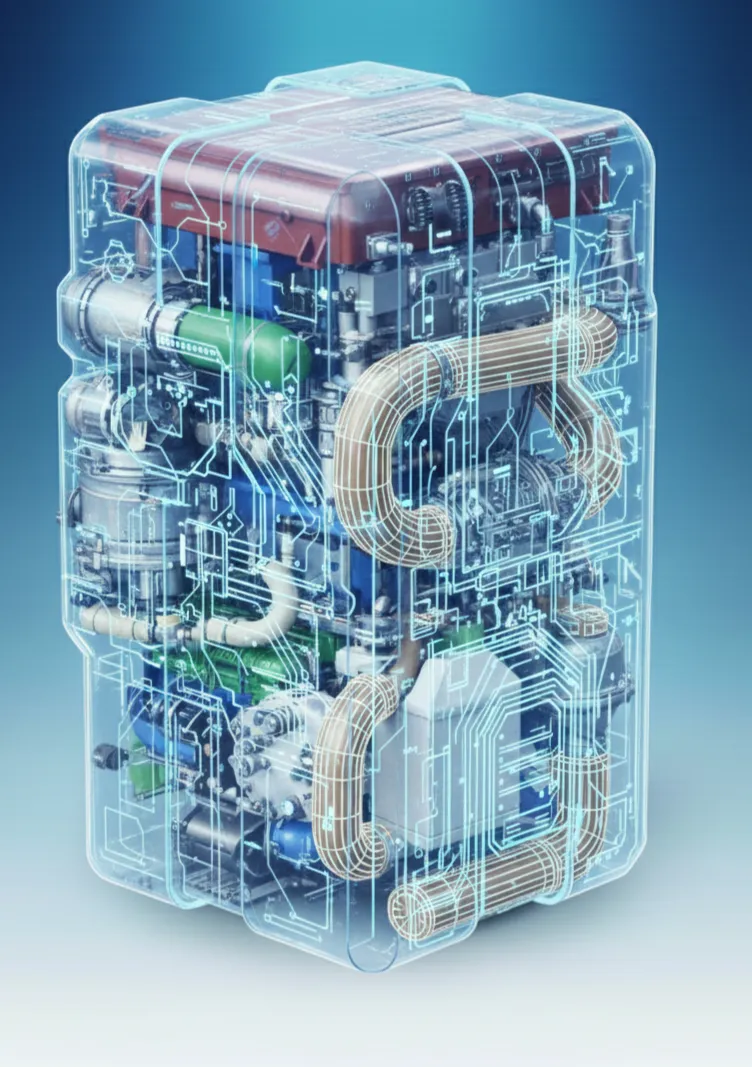
A hydrogen fuel-cell energy platform for railway and truck applications combining new technology, evolving requirements, and tight integration timelines required robust embedded software and system integration.
Engineering Challenge
The program needed to ramp up software development capability while managing hardware dependencies, complex sensors and actuators, and production-intent constraints.
Our Contribution
- Software development organization setup
- ECU prototyping support
- AUTOSAR platform strategy and Basic Software configuration
- Controls and application software development using Model-Based Design
- Development of complex sensor and actuator drivers
- Software integration and validation strategy
- Virtual and real HIL bench development
Outcome
A production-intent embedded software platform supporting fuel-cell energy management, validated through virtual and real testing environments.
AUTOSAR BSW Platform Strategy
Reusable platform architecture
Context
Multiple ECU variants led to duplicated effort and unstable integrations across projects.
Engineering Challenge
The customer needed a reusable AUTOSAR BSW platform that could scale across ECU variants while remaining compatible with application and safety constraints.
Our Contribution
- AUTOSAR architecture definition and platform partitioning
- Template generation using DaVinci Developer
- Multi-instance support for ECU classes
- Generic Complex Device Driver (CDD) strategy
- Integration and validation using vVirtualTarget and CANoe
- Alignment with application software and safety requirements
Outcome
A reusable AUTOSAR BSW platform reducing integration complexity and supporting multi-variant ECU development.
ECU Virtualization
Parallel development & testing
Context
Hardware availability and late design changes were slowing down development and testing activities.
Engineering Challenge
Software teams were blocked by hardware dependencies, limiting early validation and parallel workstreams.
Our Contribution
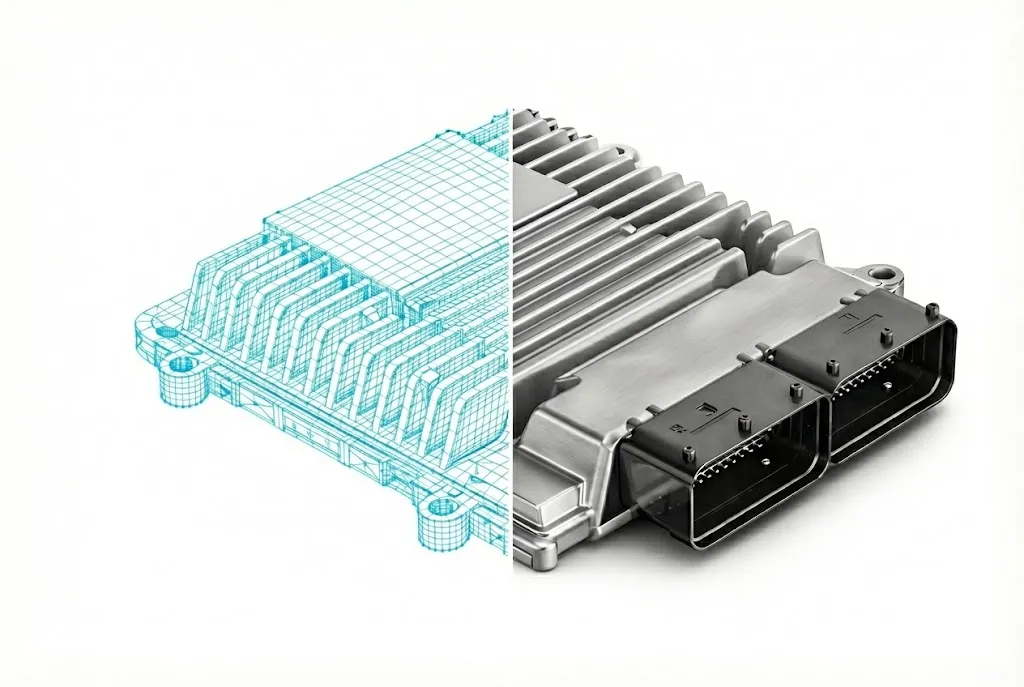
- Setup of virtual ECU environments using Vector vVirtualTarget
- Dual-target configuration for virtual and real ECU builds
- Integration of virtual ECU software as DLLs in CANoe
- Rest-bus and plant simulation for system-level testing
- Support for early debugging and regression testing
Outcome
Decoupled software progress from hardware availability, enabling earlier testing and faster issue detection.
System and Software Qualification Testing
On-site software & system testing (HIL)
Context
During late project phases, verification gaps were identified across test coverage, traceability, and release evidence, creating delivery and quality risks under tight timelines.
Engineering Challenge
Verification activities had to be executed directly on-site, within the customer's engineering environment, under high delivery pressure, and without disrupting ongoing development activities. Limited iteration cycles required fast analysis, decision-making, and execution.
Our Contribution
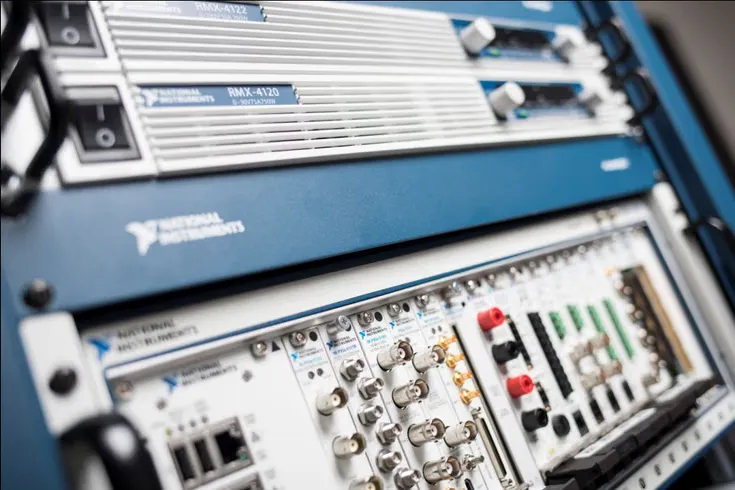
- On-site execution of software and system-level testing on HIL setups
- Reinforcement of integration and system testing in late project phases
- Identification and closure of verification and traceability gaps
- Consolidation of QA status and release readiness indicators
- Generation of audit-ready verification evidence
- Hands-on support to engineering teams during late fixes, re-testing, and regression cycles
Outcome
Verification gaps closed under tight timelines. Stabilized qualification and release status. Improved confidence in final delivery readiness.
Comprehensive CI/CD Pipelines for Embedded Software
Automated quality gates
Context
Manual quality checks and disconnected tools limited visibility and repeatability of software verification.
Engineering Challenge
The customer needed automated quality gates aligned with embedded and AUTOSAR-based development.
Our Contribution
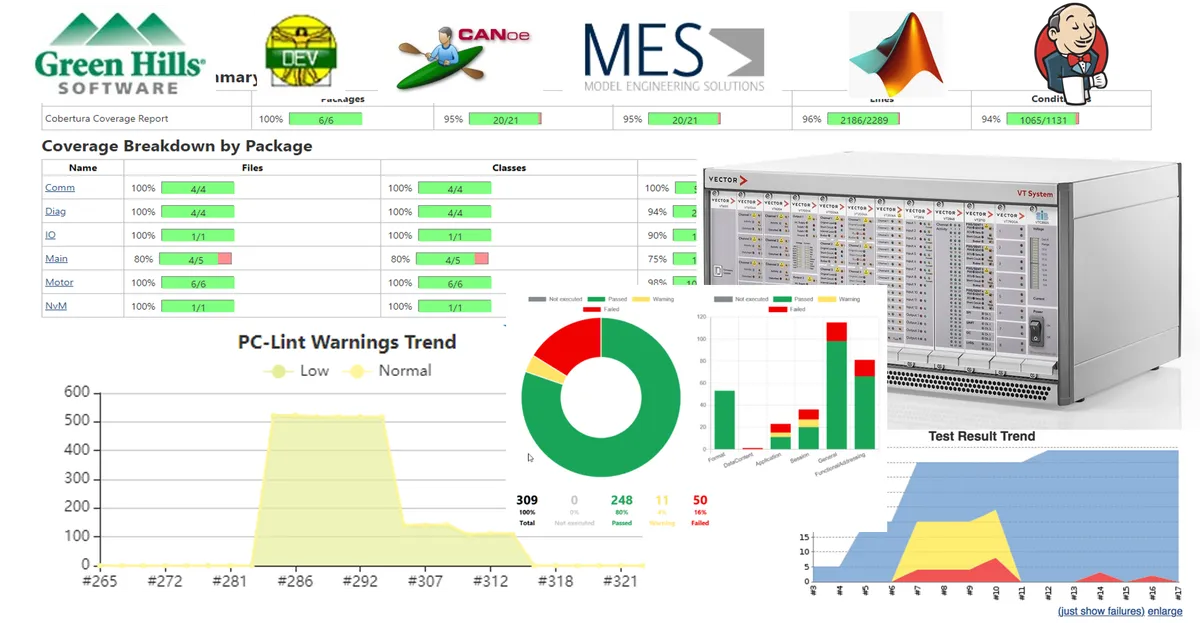
- Design of multi-stage CI/CD pipelines for embedded software
- Automation of static analysis, unit testing, and integration testing
- Integration with ALM and requirements traceability
- Alignment with verification and qualification needs
Outcome
Improved consistency and traceability of quality activities across development stages.
Body Electronics ECU Validation
Acceptance testing
Context
Body electronics ECUs controlling lighting, sunroof, and PDLC functions required acceptance testing prior to vehicle integration.
Engineering Challenge
System-level validation had to be completed within tight integration timelines.
Our Contribution
- Definition of integration and acceptance test strategies
- Test setup and execution for ECU validation
- Support during issue analysis and resolution
Outcome
Validated ECUs ready for downstream vehicle integration.
Functional Safety Engineering Deployment
ISO 26262 organization setup
Context
An automotive Tier-1 operating across multiple business units needed to establish a functional safety engineering approach compliant with ISO 26262.
Engineering Challenge
Gaps existed at organizational, process, and tooling levels, limiting the ability to develop safety-critical applications.
Our Contribution
- Functional Safety audits and gap analysis
- Setup of functional safety organization and roles
- Definition of safety processes, methods, and workflows
- Toolchain configuration aligned with functional safety lifecycle
- Development and delivery of functional safety trainings
- Provision of expert resources to execute safety activities
Outcome
A deployable functional safety engineering framework enabling consistent ISO 26262-compliant development.
Functional Safety for HV Battery
System safety coordination
Context
An automotive OEM developing a high-voltage battery pack within a distributed supplier environment.
Engineering Challenge
Vehicle- and system-level functional safety activities had to be coordinated across multiple suppliers and interfaces.
Our Contribution
- RAMS planning and Functional Safety management
- Vehicle-level Hazard Analysis and Risk Assessment (HARA)
- Functional Safety Concept definition (vehicle & system level)
- Supplier selection and safety interface support
- DIA establishment and supplier audits
- Confirmation reviews and safety case support
Outcome
Improved safety governance and alignment across OEM and supplier ecosystem.
ERTMS Railway Signaling Safety
EN 50126/50129 compliance
Context
A railway OEM developing signalling systems under EN 50126 / EN 50129 standards for ERTMS deployment.
Engineering Challenge
Managing safety requirements, risks, and certification interfaces across system and software teams.
Our Contribution
- Risk analysis and risk log management
- Safety requirements development and review (system & software)
- Interface management with design and verification teams
- Coordination with Independent Safety Assessor (ISA)
- Contribution to safety processes and toolchain improvement
Outcome
Improved consistency and clarity of safety engineering activities aligned with railway certification requirements.
Engineering Knowledge Agent
Data sovereignty for sensitive industries
Context
Engineering teams in highly regulated environments needed faster access to internal technical documentation, standards, and project knowledge, while maintaining strict data sovereignty over sensitive information.
Engineering Challenge
Critical information was spread across documents and tools, making retrieval slow and error-prone. External AI solutions were not acceptable due to data sensitivity in the nuclear sector.
Our Contribution
- Design and deployment of AI-based conversational agents
- Indexing of technical documentation and standards
- Retrieval-augmented generation (RAG) for source-grounded answers
- Integration with engineering toolchains
- Deployment with internal data sovereignty guarantees
Outcome
Improved accessibility and reuse of internal engineering knowledge while maintaining strict data sovereignty for nuclear industry applications.
AEGIX FMEA Suite
AI-assisted failure mode and effect analysis
Context
Traditional FMEA activities are time-consuming and difficult to keep consistent across projects.
Engineering Challenge
Explore how AI could support FMEA drafting and verification using existing engineering data.
Our Contribution
- Internal development of an AI-assisted FMEA web application
- Integration of project documents, standards, and historical FMEAs
- RAG-based agents for failure mode suggestion and gap detection
- Integration concepts with popular ALMs
Outcome
A promising engineering tool platform demonstrating AI-augmented FMEA — in internal evaluations it roughly halved drafting time and improved quality through proactive gap identification.
Case studies presented are composites of real engagements to protect client confidentiality while demonstrating our technical capabilities.
Facing similar challenges?
Let's discuss how our engineering expertise can help solve your complex technical problems.
Start a Conversation